
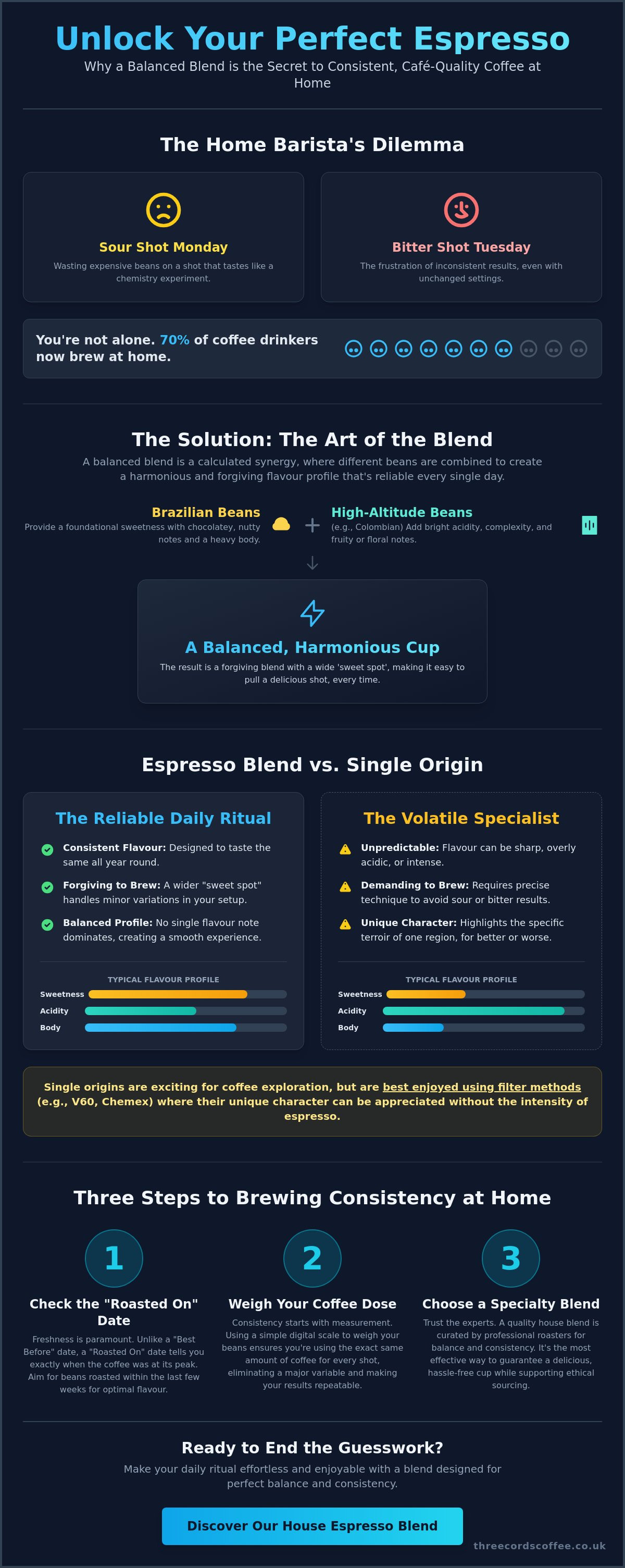
The most expensive espresso machine in the world cannot fix a bag of beans that fights against your palate. You have likely felt the frustration of pulling a sour shot on Monday and a bitter one on Tuesday, even though you didn't change a single setting. It is exhausting to waste a £11 bag of beans on results that taste more like a chemistry experiment than a morning treat. Choosing a masterfully balanced espresso blend is the most effective way to end this cycle and reclaim your kitchen from the "coffee snobs."
With 70% of coffee drinkers now brewing at home, we believe that high-quality coffee should be an accessible staple rather than an intimidating luxury. We agree that you shouldn't have to navigate confusing jargon just to enjoy your wake-up call. This guide will show you how a deliberate layering of regional strengths creates the consistency you need for a perfect "signature" cup every single morning. You will discover how to describe the flavours you love and gain the confidence to brew for guests without needing a degree in technical terminology. Let's make your daily ritual effortless and enjoyable.
Key Takeaways
- Understand why a balanced espresso blend offers a more reliable and harmonious flavour profile than the often volatile single-origin alternatives.
- Learn to identify the key components of a great shot, including the foundational sweetness of Brazilian beans and the bright complexity of high-altitude lots.
- Discover why checking for a "roasted on" date rather than a "best before" date is essential for achieving café-quality freshness at home.
- Master the simple habit of weighing your coffee dose with a scale to ensure your morning cup remains consistent every single day.
- Find out how choosing a specialty house blend makes your daily brewing routine effortless whilst supporting ethical sourcing practices.
What is a Balanced Espresso Blend? Beyond the Buzzwords
A balanced espresso blend is more than just a bag of beans; it is a carefully calculated synergy. When we talk about balance in the coffee industry, we are looking for a harmonious relationship between three key pillars: sweetness, acidity, and bitterness. If one of these dominates, the experience feels lopsided. Too much acidity tastes sour, whilst too much bitterness feels harsh and dry. We combine beans from various altitudes and regions to create a profile that hits the centre of the palate. For example, a high-altitude Colombian bean might provide the bright acidity, whilst a naturally processed Brazilian bean offers the chocolatey sweetness and heavy body that anchors the cup.
Before diving into the mechanics of brewing, it helps to understand the foundation. What is espresso? At its core, it is a concentrated brewing method that amplifies every characteristic of the bean, making the need for balance even more critical. Since coffee is an agricultural product that changes with the seasons, our roasters work behind the scenes to adjust the components of the blend throughout the year. This ensures that your Tuesday morning double shot tastes exactly like the one you enjoyed last month, regardless of harvest cycles. This reliability makes a blend the "reliable friend" of your morning routine.
The Myth of the "Perfect" Shot
The speciality industry often obsesses over a "perfect" shot, but we think that approach is a bit exclusionary. Taste is entirely subjective. Your favourite shot isn't the one that hits a specific technical metric; it's the one you actually enjoy drinking. We reject coffee snobbery because it creates unnecessary barriers to great coffee. A blend is designed to smooth out the aggressive, often volatile peaks found in single-origin beans. While a single-origin might be exciting for a one-off tasting, its sharp acidity or intense floral notes can be exhausting for a daily habit. A blend provides a rounded experience that feels comfortable and consistent.
Consistency is King
Brewing at home presents unique challenges that professional baristas don't always face. Your kitchen temperature might fluctuate, or your grinder might produce a slightly different result from one day to the next. A well-crafted balanced espresso blend is forgiving. It provides a wider "sweet spot" for extraction, meaning you don't have to be a scientist to get a delicious result. A balanced blend is a curated mix of beans designed to deliver a reliable and approachable flavour profile every time you turn on your machine. This stability makes it the ideal choice for those who want quality without the stress of constant troubleshooting.
The Anatomy of Flavour: Sweetness, Acidity, and Body
Understanding a balanced espresso blend requires looking at coffee as a culinary puzzle where every piece has a specific role. Sweetness is the indispensable foundation of any great shot. Without it, the drink feels hollow and sharp. We often source this sweetness from naturally processed beans found in Brazil or Central America. These beans are typically dried with the fruit still attached, which allows the natural sugars to permeate the seed. This process creates a reliable, sugary base that makes the espresso approachable for everyone, not just the experts.
Acidity and body provide the contrast and texture. Acidity is the "brightness" in the cup, similar to how a splash of vinegar or a squeeze of lime lifts a heavy stew. We look to high-altitude lots from Colombia or East Africa to provide this spark of complexity. Body, on the other hand, refers to the physical weight of the coffee on your tongue. It's the difference between the thinness of water and the richness of whole milk. Finally, bitterness acts as the "bass note." Whilst often misunderstood, a small amount of bitterness provides the necessary structure to keep the sweetness from feeling cloying. When we are building an espresso blend, we are constantly adjusting these ratios to ensure no single element overpowers the others.
The Maillard Reaction and Roast Profile
The roasting process is where these raw components are transformed into the flavours you recognise. We focus heavily on the Maillard reaction, which is the chemical change between amino acids and reducing sugars. This reaction is responsible for the bready, toasted, and caramel-like notes that make espresso so comforting. We prefer a "medium and developed" roast profile because it preserves these delicate sugars. Ultra-light roasts can often be too aggressive and sour for espresso, whilst "dark and oily" roasts tend to destroy the bean's unique character and replace it with a generic smoky bitterness. Our goal is to find the sweet spot where the bean's origin can still be tasted.
Regional Superstars in Your Blend
Different regions bring unique strengths to a balanced espresso blend. Brazil is the heavy lifter, providing the chocolatey and nutty base that ensures a smooth finish. Colombia adds a juicy, berry-like acidity that brings life to milk-based drinks; it's the reason your flat white tastes vibrant rather than just like warm milk. We also love exploring the rich, earthy complexity of high-quality African Arabica from Uganda. These beans add a layer of depth and a syrupy mouthfeel that makes the final cup feel more luxurious. If you're ready to experience this harmony for yourself, our House Espresso Blend is designed to showcase these regional superstars in every shot.
Espresso Blends vs Single Origins: Which is Right for You?
In the world of speciality coffee, there is often a quiet pressure to choose single-origin beans as a badge of expertise. Whilst these beans offer a fascinating snapshot of a specific farm or micro-lot, they are notoriously volatile to brew. A sudden change in humidity or a slight slip in your technique can turn a single-origin shot from vibrant to undrinkable. In contrast, a balanced espresso blend is a curated experience designed to taste excellent every single time you pull a shot. It acts as the reliable backbone of your daily routine, whether you are rushing out the door or hosting friends for lunch.
Choosing between them depends on your goals for the day. If it is a Tuesday morning and you need a dependable caffeine fix, a blend is your best friend. If it is a slow Sunday and you want to experiment with your Aeropress or explore a specific harvest from Costa Rica, a single origin is a fantastic choice. Think of a blend as your favourite comfortable jumper and a single origin as a bespoke suit; both have their place, but one is much easier to live with daily.
The Milk Factor
Most people enjoy their coffee with milk, and this is where a blend truly shines. Delicate single origins often get lost when combined with steamed milk, resulting in a drink that tastes more like warm dairy than coffee. A balanced espresso blend is specifically roasted to cut through milk. The chocolatey, nutty notes from Brazilian components provide a sturdy structure that complements the natural sweetness of the milk. This is the secret to finding the Best Coffee Beans for Flat White and Lattes at Home. It ensures your flat white has that rich, velvety finish you expect from a high-end café without the guesswork.
The Learning Curve
If you are new to the world of home espresso, starting with a blend will save you a significant amount of frustration. Every bean has a sweet spot for extraction, but blends have a much wider margin for error. This forgiving nature allows you to focus on mastering your technique without wasting half a bag of expensive beans on bad shots. When your coffee tastes consistent, it becomes much easier to identify when your grind size is slightly off. A blend acts as a stable baseline, giving you the confidence to grow your skills without the elitist jargon or technical hurdles often associated with single-origin snobbery. Because we roast our beans weekly, you can trust that your starting point is always fresh and reliable.
How to Dial In Your Espresso Blend at Home
Dialling in is simply a fancy term for making sure your coffee tastes exactly how you want it to. You don't need a lab coat or expensive sensors to get this right. By using a balanced espresso blend, you already have a forgiving foundation that makes the process much easier. Follow these five straightforward steps to find the sweet spot for your morning cup.
- Step 1: Check the date. Freshness is non-negotiable. Always look for a "roasted on" date rather than a "best before" date. If your beans were roasted more than six months ago, they'll likely taste flat and woody.
- Step 2: Weigh your dose. Consistency starts with a digital scale. Measuring by eye or using a scoop is unreliable because different beans have different densities. Aim for 18g of ground coffee in your portafilter basket.
- Step 3: Follow the Golden Ratio. A 1:2 ratio is the standard starting point. If you put 18g of coffee in, you want 36g of liquid espresso in your cup.
- Step 4: Time the flow. Start your timer when you turn the pump on. You are looking for that 36g of coffee to finish pouring in a 25 to 30 second window.
- Step 5: Taste and adjust. This is the most important part. If the shot tastes sharp or sour, your grind is likely too coarse; try a finer setting. If it tastes unpleasantly bitter or dry, your grind is too fine; go a bit coarser.
The Importance of Freshness
We roast our coffee in small batches and deliver weekly across the UK to ensure you never have to settle for stale beans. However, don't brew them the moment they arrive through your letterbox. Espresso beans need a "degassing" period of at least 3 to 7 days to release excess carbon dioxide. If you brew too soon, these gases can prevent water from fully saturating the grounds, leading to a thin and uneven shot. To keep your beans at their best, store them in a cool, dark cupboard in an airtight container. This simple habit preserves the intricate flavour profile for up to 4 weeks after roasting.
Equipment Check: Beyond the Machine
Your espresso machine might look impressive, but a high-quality burr grinder is actually your most important investment. Burr grinders produce uniform particles, which is essential for the even extraction required for a balanced espresso blend. Blade grinders, by comparison, produce a mix of dust and boulders that will always taste inconsistent. If you don't have a dedicated espresso machine yet, you can still enjoy a rich, concentrated brew. An Aeropress is a fantastic way to make an "espresso-style" coffee at home without the high price tag. You can learn the best methods in The Ultimate Aeropress Coffee Maker UK Guide.
Ready to put these steps into practice? Grab a bag of our freshly roasted House Espresso Blend and start brewing with confidence today.
Discover the Three Cords Coffee House Espresso Blend
Our House Espresso Blend is the result of everything we've discussed about achieving that perfect, everyday cup. We don't believe speciality coffee should be hidden behind technical jargon or elitist attitudes. Instead, we've created a balanced espresso blend that brings together high-quality beans from ethical producers to ensure your morning ritual is effortless. It's the favourite choice for home baristas across the UK because it delivers a consistent, chocolatey base that works just as well in a flat white as it does in a straight shot. Many of our customers tell us that switching to this blend was the single biggest improvement they made to their morning routine.
Transparency and integrity are at the heart of what we do. We don't just pick beans for their flavour; we choose them based on the impact they have on the communities that grow them. By supporting social causes and ensuring ethical sourcing, every bag you buy contributes to a fairer coffee industry. This commitment to doing good is why we roast in small batches. It allows us to maintain strict quality control and ensure that every 250g or 1kg bag meets our high standards. We believe that great coffee should taste good and do good at the same time.
The Story Behind Three Cords Coffee
Three Cords Coffee began with Chris and Sarah’s mission to make speciality coffee inclusive for everyone. We saw too many people put off by coffee snobbery, so we decided to offer a different experience. We roast our coffee weekly in the UK to guarantee freshness. This small-batch approach means we can focus on the nuances of the roast profile, ensuring that the sugars are perfectly developed without becoming bitter. We say "no" to the gatekeeping of the coffee world and "yes" to helping you enjoy great flavour without the stress. Whether you're using a high-end machine or a simple Aeropress, our coffee is designed to be approachable and reliable.
Join Our Coffee Community
We want to support you on your journey to becoming a confident home barista. If you're looking to sharpen your technique, you can join our Barista Skills Foundation Course to learn the fundamentals of extraction and milk texturing. This hands-on training is designed to take the guesswork out of your brewing process.
Flexible coffee subscriptions make your life even easier, ensuring you never run out of beans. You can choose your favourite blend and set a delivery schedule that suits your habits, whether you're brewing for one or a whole household. This means you can wake up every morning knowing that a fresh bag of speciality coffee is already on its way to your door. Starting your journey today with a bag of our House Espresso is the easiest way to experience the difference that a truly balanced espresso blend can make to your daily life.
Elevate Your Daily Brewing Ritual
You've learned how a balanced espresso blend provides the reliable sweetness and body needed to create a consistent morning cup. By following the simple steps of weighing your 18g dose and timing your 25 to 30 second extraction, you can finally leave behind the frustration of wasted beans and inconsistent flavours. Our approach ensures that you don't need to be a technical expert to enjoy a rich, velvety flat white or a smooth double shot in your own kitchen.
Speciality coffee is at its best when it's accessible and enjoyable. That is why we focus on small-batch roasting and ethical sourcing to give you the highest quality without the elitist hurdles. Ready to transform your morning routine? Shop our Signature House Espresso Blend to enjoy beans that are freshly roasted weekly in the UK and delivered straight to your door. We offer a satisfaction guarantee for every home brewer because we want you to feel confident in every shot you pull. It's time to make your daily coffee something you truly look forward to. Happy brewing.
Frequently Asked Questions
What is the difference between an espresso blend and regular coffee beans?
Technically, any coffee bean can be used to make espresso, but an espresso blend is specifically curated to handle the intensity of high-pressure extraction. We choose and roast these beans to ensure they don't taste overly acidic or thin when concentrated into a small shot. Whilst a "regular" bean might be roasted for filter methods, a blend is designed to provide a consistent, syrupy body every time.
Can I use a balanced espresso blend for filter coffee or Aeropress?
Yes, you absolutely can. Using a balanced espresso blend in an Aeropress or cafetière often results in a rich, comforting cup with heavy chocolate and nut notes. Because these blends are roasted to a medium or medium-dark level, they provide a fuller mouthfeel than lighter filter roasts. It is a fantastic option if you prefer your morning coffee to be bold and smooth rather than bright and fruity.
How long do espresso blend coffee beans stay fresh after roasting?
For the best flavour, you should use your beans between 7 and 30 days after the "roasted on" date. We recommend a resting period of at least 3 days to allow carbon dioxide to escape. After 4 weeks, the delicate oils in the coffee begin to oxidise more rapidly. This can lead to a flat or stale taste and a noticeable reduction in the quality of your crema.
Is an espresso blend better for milk-based drinks like lattes?
Blends are generally superior for lattes and flat whites because they have the "strength" to cut through the milk. The foundational notes of cocoa and toasted nuts in a balanced espresso blend provide a clear contrast to the natural sweetness of steamed dairy. This ensures your drink tastes like high-quality coffee rather than just warm milk, which is a common issue when using delicate single-origin beans.
Why does my espresso shot taste sour even with a balanced blend?
A sour taste is almost always a sign of under-extraction, which happens when the water passes through the grounds too quickly. If your shot finishes in under 20 seconds, the water hasn't had enough time to pull out the sugars. Try adjusting your grinder to a finer setting to slow the flow. This allows the water more contact time with the coffee to extract those sweet, balancing flavours.
Do I need a professional grinder to enjoy a speciality espresso blend?
You don't need a commercial machine, but a decent burr grinder is the most important tool in your kitchen. Blade grinders chop beans into inconsistent "dust and boulders," which leads to a shot that is both bitter and sour at the same time. A burr grinder ensures uniform particles, which is essential for the even extraction required to taste the true character of a speciality blend.
What regions are typically found in a balanced espresso blend?
We typically combine beans from Brazil for their reliable body and sweetness with lots from Colombia or Central America for a touch of bright acidity. Some blends also incorporate high-quality African beans from regions like Uganda to add an earthy complexity. This layering of regional strengths is what prevents the coffee from tasting one-dimensional and ensures it feels rounded on the palate.
How much coffee should I use for a double shot of espresso?
A standard double shot in the UK typically uses 18g of ground coffee. This dose fits most modern portafilter baskets and provides a solid foundation for a 1:2 brew ratio. Using a digital scale to measure this exact weight every morning is the simplest way to avoid wasting beans. Consistency in your dose is the first step toward achieving a professional-quality shot at home.